
1. Introduction: The Invisible Heart of Global Energy Transformation
In the rapidly evolving landscape of modern clean technology, power electronics serve as the vital bridge between energy generation, storage, and consumption. At the absolute core of every advanced power inverter, converter, and energy storage module lies a critical yet frequently overlooked component: the metallized dielectric capacitor. Today, as power conversion equipment demands higher voltage levels, smaller physical footprints, and extreme operational reliability, traditional capacitor dielectrics are approaching their physical limitations.
Enter the breakthrough innovation: 2-micron ultra-thin capacitor film. Measuring 1/30th the diameter of a standard human hair, this ultra-thin polymer dielectric film represents a quantum leap in material science. Despite its paper-thin, featherweight profile, this advanced dielectric film handles colossal electrical stresses, standing as the "invisible heart" of next-generation clean energy systems. From high-power electric vehicles (EVs) navigating demanding drive cycles to ultra-high-voltage direct current (HVDC) smart grids transmitting renewable energy across continents, ultra-thin capacitor film technology is reshaping performance benchmarks worldwide.
2. Engineering Precision: What is 2-Micron Ultra-Thin Capacitor Film?
Capacitance ($C$) in a parallel-plate or wound film capacitor is inversely proportional to dielectric thickness ($d$), expressed mathematically as:
Consequently, reducing dielectric film thickness allows capacitor manufacturers to dramatically increase capacitance per unit volume while significantly decreasing the physical size and weight of the capacitor package.
However, scaling dielectric film thickness down to 2 microns ($2\,\mu\text{m}$) presents formidable engineering challenges. At this sub-micron operational boundary, microscopic physical flaws, pinholes, or minor thickness fluctuations lead to localized electrical stress concentrations, premature dielectric breakdown, and catastrophic component failure. Achieving a commercially viable 2-micron ultra-thin capacitor film requires total elimination of structural impurities and unmatched dimensional precision.
-
Nominal Thickness: $2.0\,\mu\text{m}$ (30 times thinner than human hair)
-
Thickness Uniformity: $\le \pm 1\%$ across the entire film web width
-
Dielectric Breakdown Strength: $> 650\text{ V}/\mu\text{m}$
-
Dissipation Factor ($\tan\delta$): $\le 0.0002$ (minimal energy dissipation and thermal self-heating)
-
Operating Temperature Range: $-40^\circ\text{C}$ to $+125^\circ\text{C}$
3. The Science Behind Precision Biaxial Orientation
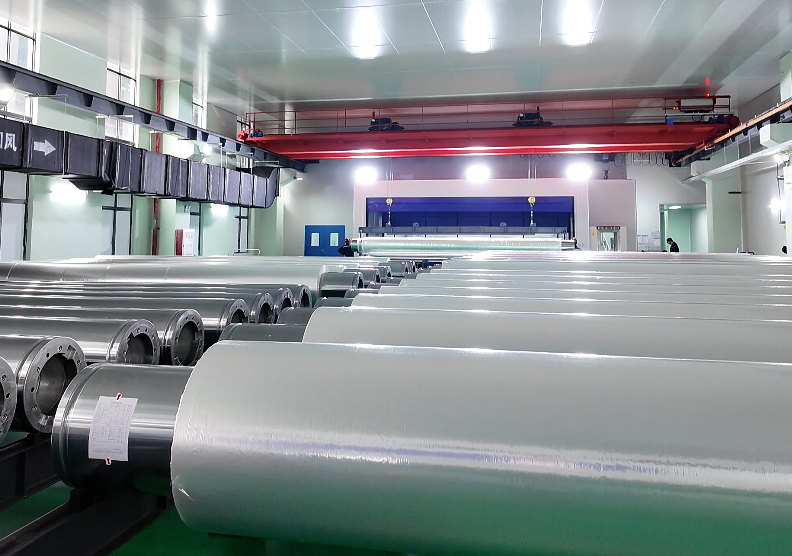
The manufacturing of high-performance 2-micron ultra-thin capacitor film relies on state-of-the-art precision biaxial orientation (stretching) technology. During processing, specialized polymer resin pellets (such as ultra-pure high-isotactic polypropylene) are melted, filtered through sub-micron melt filtration units, and extruded into a cast sheet.
The cast sheet then undergoes controlled mechanical stretching in both the Machine Direction (MD) and Transverse Direction (TD) under precise multi-stage thermal zones:
-
Directional Molecular Alignment: Biaxial stretching forces the polymer molecular chains into a dense, highly oriented planar crystalline structure, significantly raising the film's tensile strength, puncture resistance, and dielectric breakdown voltage.
-
Strict Thickness Uniformity ($\pm 1\%$): Utilizing closed-loop non-contact laser/X-ray thickness gauges and automated die lip controls, the web thickness variance is constrained to within $\pm 1\%$. This guarantees that every square millimeter of the capacitor film delivers uniform dielectric resistance without localized weak points.
-
Ultra-Clean Processing: To prevent dielectric contamination, production lines operate inside Class 100/1000 cleanroom environments, preventing microscopic airborne particles from compromising dielectric integrity.
4. Strategic Applications Across Next-Generation Clean Energy Sectors
4.1 New Energy Vehicles (NEVs) & EV Drive Inverters
In electric vehicle drive systems, DC-link capacitors absorb high-frequency ripple currents from the main traction inverter. Transitioning from traditional 3.5–5 micron dielectric films to 2-micron ultra-thin capacitor film reduces DC-link capacitor volume by up to 45% while boosting volumetric power density. This footprint reduction allows automotive engineers to integrate power electronics directly into compact electric drive units, reducing EV curb weight, increasing driving range, and supporting high-voltage 800V Silicon Carbide (SiC) fast-charging architectures.
4.2 Photovoltaic (Solar) Inverters & Wind Energy Conversion
Solar PV and wind turbine power plants require continuous, high-efficiency conversion of variable DC output into grid-compliant AC power. Inverters equipped with 2-micron ultra-thin capacitor film capacitors deliver exceptional ripple current handling and extended operational lifespans ($> 100,000$ hours), lowering the Levelized Cost of Energy (LCOE) and providing maximum system uptime under harsh environmental conditions.
4.3 5G Telecommunications & High-Density Power Modules
5G macro base stations and edge computing servers require compact, high-frequency switch-mode power supplies (SMPS). The ultra-low dissipation factor ($\tan\delta$) and high volumetric capacitance of 2-micron ultra-thin capacitor film enable compact filter capacitors that maintain power stability and prevent signal interference in compact base station housings.
4.4 Smart Grids & High-Voltage Direct Current (HVDC) Transmission
Modern smart power grids rely on HVDC transmission to transport renewable energy across thousands of miles with minimal line losses. Ultra-thin metallized capacitor films serve as critical voltage balancing and filtering components in modular multilevel converters (MMC), providing grid resilience against transient voltage surges.
5. Comparative Performance Analysis
| Specification / Performance Metric | Standard Dielectric Film (5.0μm) | Advanced Dielectric Film (3.0μm) | 2-Micron Ultra-Thin Film (2.0μm) |
| Volumetric Capacitance Density | Baseline ($100\%$) | $+178\%$ | $+520\%$ |
| Thickness Uniformity Tolerance | $\pm 3\%$ to $\pm 5\%$ | $\pm 2\%$ | $\pm 1\%$ |
| Inverter Module Size Reduction | $0\%$ | $\approx 25\%$ | $\ge 45\%$ |
| Dielectric Breakdown Voltage | $450\text{ V}/\mu\text{m}$ | $550\text{ V}/\mu\text{m}$ | $> 650\text{ V}/\mu\text{m}$ |
| Target Application Domains | General Industrial Drives | Standard Solar Inverters | 800V EVs, 5G Base Stations, HVDC, Micro-Inverters |
6. Industry Breakthrough: From Import Dependency to Global Leadership
Historically, the global production of ultra-thin capacitor films below 3 microns was monopolized by a few overseas suppliers in Japan and Europe. High technical entry barriers, specialized equipment costs, and strict process controls made localized production extremely difficult.
Through persistent research and development, process engineering, and custom equipment optimization, domestic production has successfully broken this technological monopoly. Achieving scalable mass production of 2-micron ultra-thin capacitor film with $\pm 1\%$ thickness precision marks a major shift in global manufacturing. Localized manufacturing ensures supply chain resilience for international power electronic OEMs, reduces raw material overhead, and accelerates the global deployment of high-density clean energy technology.
7. Conclusion
The breakthrough in 2-micron ultra-thin capacitor film manufacturing proves that major advancements in clean energy performance are achieved at the micro-scale. By offering ultra-thin dimensions, high breakdown strength, and $\pm 1\%$ thickness uniformity, this advanced polymer dielectric film empowers manufacturers worldwide to build smaller, cooler, and more efficient energy devices. As global electrification accelerates, ultra-thin capacitor film will remain the pivotal silent driver behind global energy innovation.