
The global electronics industry is locked in a race toward miniaturization. As devices become smaller and more powerful, the components inside them—especially capacitors—are being pushed to their physical limits. For decades, the go-to solution for shrinking capacitors was simply to make the dielectric film thinner. However, this approach created a new set of problems: poor heat dissipation, reduced voltage endurance, and mechanical fragility.
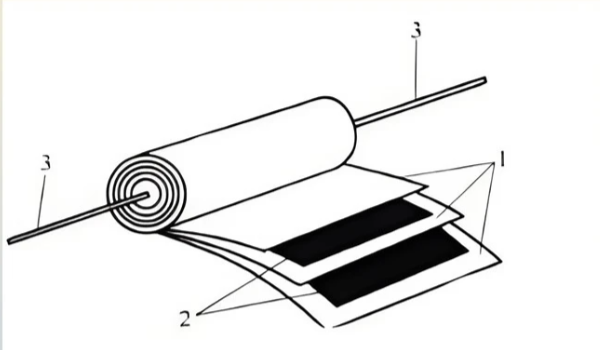
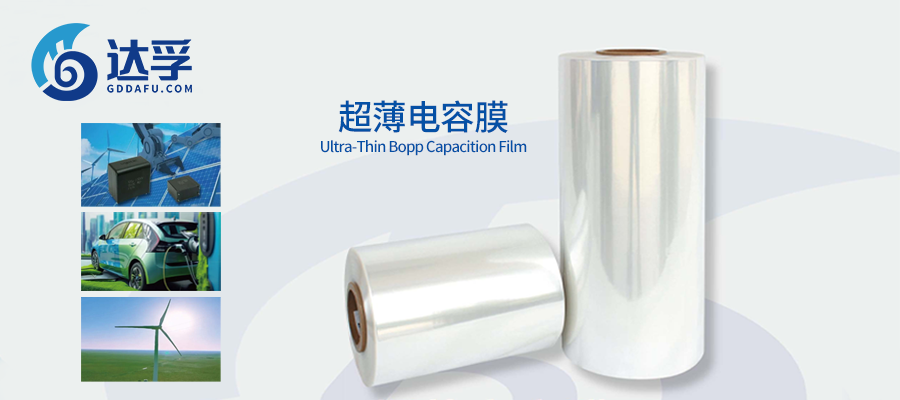
Enter Dafu New Materials (达孚新材). With its groundbreaking mass production of 2-micron BOPP (Biaxially Oriented Polypropylene) ultra-thin capacitor film, the company is redefining what is possible. This isn't just about thinness; it's about delivering a holistic package of performance, including high dielectric strength, 105°C temperature resistance, and unprecedented dimensional stability.
This article delves into the technology behind Dafu’s breakthrough and why it is becoming the material of choice for engineers designing the next generation of reliable electronics.
The Limits of Thinness: Why Traditional Films Fail
Before exploring the solution, it’s crucial to understand the problem. When capacitor films are stretched below 3 microns using conventional methods, they often exhibit:
-
Excessive Thermal Shrinkage: Leading to short circuits in high-temperature environments.
-
Poor Isotropy: Uneven stretching causes the film to be strong in one direction but weak in another, resulting in tears during winding.
-
Inconsistent Dielectric Properties: Thickness variations create "weak spots" prone to electrical breakdown.
Dafu New Materials tackled these issues head-on with a production philosophy focused on quality over mere dimension.
The Dafu Difference: A Symphony of Stretching Technologies
At the core of Dafu’s innovation is its unique manufacturing infrastructure, which combines two distinct stretching methodologies:
1. Sequential and Simultaneous Stretching Capabilities
Unlike competitors limited to a single production method, Dafu possesses both sequential and simultaneous stretching manufacturing capabilities.
-
Simultaneous Biaxial Stretching ensures the polymer molecules are oriented evenly in all directions. This is the secret behind the film’s outstanding isotropy and superior transverse flatness—properties essential for high-speed automated capacitor winding.
-
Sequential Stretching allows for greater control over tensile modulus and toughness, contributing to the film’s high tensile strength.
This dual-capability approach gives Dafu the flexibility to engineer films tailored to specific end-use requirements, whether it's maximum strength or ultimate flatness.
Key Technical Specifications: Engineering for Extreme Conditions
Dafu’s 2μm BOPP film stands out in the market due to its robust performance profile, specifically designed to overcome the weaknesses of traditional ultra-thin films.
|
Feature |
Dafu 2μm BOPP Film Advantage |
Industry Standard Challenge |
|---|---|---|
|
Thickness Uniformity |
Excellent (< ±0.02μm variation) |
Poor uniformity leads to low yield |
|
Dielectric Strength |
High (> 700 V/μm) |
Decreases significantly as thickness drops |
|
Thermal Shrinkage |
Low (MD/TD ≤ 1.5% @ 150°C) |
High shrinkage causes electrode contact loss |
|
Temperature Rating |
Up to 105°C |
Typically limited to 85°C for standard BOPP |
|
Mechanical Property |
Outstanding Isotropy (Balanced MD/TD) |
Anisotropic (Weak TD strength) |
1. High Dielectric Strength & Low Dielectric Loss
In power electronics, efficiency is king. Dafu’s 2μm film maintains a high dielectric strength, ensuring it acts as an effective insulator even under high voltage stress. Simultaneously, its low dielectric loss (tan δ) minimizes self-heating. Less heat means higher energy efficiency and a longer operational life for the capacitor.
2. Thermal Endurance: Operating at 105°C
One of the most significant breakthroughs is the film's ability to withstand temperatures up to 105°C. Standard BOPP films begin to soften and shrink around 85°C, making them unsuitable for the harsh environments found in:
-
Automotive Under-the-Hood Applications
-
Industrial Motor Drives
-
High-power Density DC-DC Converters
Combined with its low thermal shrinkage, Dafu’s film provides a stable physical structure that prevents catastrophic failure due to thermal stress.
Application Spotlight: Powering the Future
Where exactly does this 2-micron marvel fit into today’s technology ecosystem?
1. Electric Vehicle (EV) Powertrains
Space and weight are at a premium in EVs. Dafu’s ultra-thin film allows capacitor manufacturers to produce DC-Link capacitors that are significantly smaller and lighter, directly improving power density and vehicle range without compromising safety margins.
2. Renewable Energy (Solar & Wind)
Inverter systems for solar panels and wind turbines operate under constant thermal cycling. The 105°C temperature resistance of Dafu’s film ensures long-term reliability, reducing maintenance costs and downtime for renewable energy installations.
3. Consumer Electronics & IoT Devices
From smart speakers to gaming consoles, the demand for compact internal components is endless. This film enables the production of high-capacitance, surface-mount capacitors that fit into increasingly slim device chassis.
4. High-Frequency Switching Power Supplies
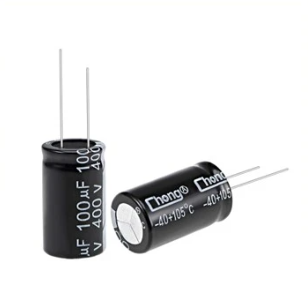
Thanks to its low dielectric loss, the film excels in high-frequency applications (above 10 kHz), making it ideal for modern switching-mode power supplies (SMPS) used in data centers and telecommunications equipment.
Conclusion: A Strategic Choice for Component Manufacturers
The development of 2-micron BOPP film is not just a materials science curiosity; it is a strategic enabler for the entire electronics value chain. Dafu New Materials has moved beyond simply making film "thinner"—they have engineered a product that solves real-world engineering problems related to heat, reliability, and manufacturability.
For procurement specialists and design engineers, selecting a supplier with proven breakthrough production technology is critical. Dafu’s combination of simultaneous and sequential stretching, coupled with its focus on thermal stability, makes its 2μm BOPP film a cornerstone material for building the durable, high-performance electronics of tomorrow.