PA12 Film can be considered for a cable-protection wrap when a design needs a flexible engineering film. The next question is what remains in contact with it during service. A low-water-absorption description does not establish compatibility with plasticizers or other ingredients in a neighboring cable jacket. That interface needs review using the actual formulations and the installed arrangement.
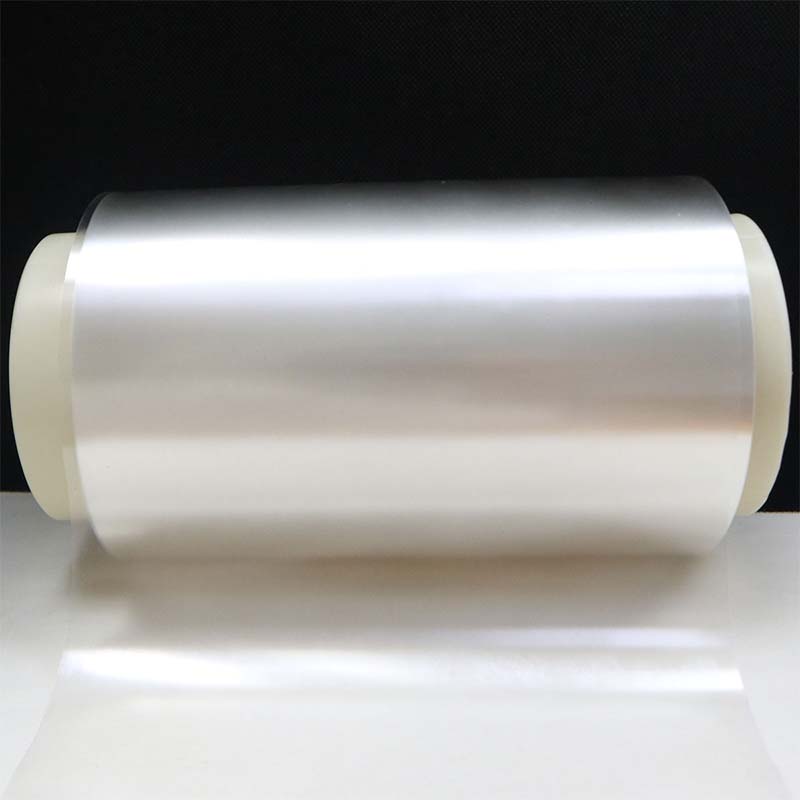
Dafu's engineering film range lists nylon 12 film for cable protective covers, with natural-color polished/matte and matte/velvet options. The confirmed supply range is 0.05–0.8 mm. Its published mechanical and electrical reference data support material screening. They do not provide a migration study or long-term contact approval for an identified cable jacket and attachment system.
Identify the source of the contact concern
Ask the cable manufacturer which material and formulation occupy the adjacent surface. A polymer family name alone may not describe the plasticizer, lubricant, coating or processing aid relevant to an observed change. Obtain the information needed for compatibility review without assuming that every flexible jacket uses the same ingredients.
If the incumbent jacket is a plasticized material, describe that as the customer's existing component, not as a PA12 film feature. The question is whether the proposed wrap can coexist with the actual neighboring formulation. Do not label the wrap plasticizer-free or resistant to all plasticizers unless the supplier provides applicable evidence.
Map other possible contacting materials, including adhesive, tape, lubricant and connectors. A tacky region discovered near a cable may originate from an attachment layer rather than from the jacket itself. An interface drawing gives the testing team a more useful starting point than a general complaint about nylon compatibility.
Define the exposure in the assembled cable
Record whether the wrap lies loosely against the jacket, is tightly restrained, or is bonded to it. Contact area, pressure and movement can differ among these arrangements. A free film coupon suspended near a jacket does not reproduce a compressed overlap or a bonded assembly.
Describe the temperature history and duration relevant to the application. A brief manufacturing contact and continuous service exposure should not receive the same conclusion without evidence. The study should also state whether the cable is bent, stored coiled or held straight during the selected exposure.
Include the installation process when it introduces heat or another material. A wrap may encounter a temporary lubricant or handling aid before it reaches its normal service position. If an unexplained change appears after assembly, these transient contacts belong in the investigation along with the permanent neighboring layers.
Separate moisture conditioning from chemical contact
PA12's water-absorption behavior addresses interaction with water under a defined procedure. It cannot establish the response to a particular organic additive mixture. Keep moisture history controlled during the contact trial so a dimensional or mechanical observation is not attributed automatically to plasticizer exposure.
Use an uncontacted reference with comparable conditioning and thermal history. Where the testing team needs to distinguish individual contributors, prepare additional controlled contacts. The aim is to locate the source of a change, not to make a broad claim that a selected substance represents every commercial cable formulation.
Screening with a candidate chemical can help frame a study, but the full jacket or assembly remains important. A neat substance may create an exposure different from that delivered by a compounded jacket. State the relationship between the screen and the intended use before transferring the result.
Observe more than visible damage
Inspect for tack, deposits, whitening, swelling, cracking and changes in flexibility as relevant observations. Record the affected face and location. A visually unchanged specimen may still need functional checks, while a superficial deposit does not automatically prove that the PA12 bulk material has deteriorated.
Compare dimensions and mechanical behavior using methods suited to the role of the wrap. If the part must slide during installation or remain positioned during bending, those functions deserve direct observation. A tensile strip result alone may not describe friction, overlap movement or local separation in the cable assembly.
When a mass or dimensional measurement is used, document cleaning, conditioning and handling. Removing a deposit before weighing can change the question being answered. The report should state whether it measures the complete contacted specimen or the underlying film after a defined preparation procedure.
Include adhesives and printed identification
An adhesive-backed wrap introduces an additional interface with its own formulation and exposure limits. Review the actual adhesive with its supplier. The chemical resistance of PA12 cannot establish whether that adhesive will soften, release or leave residue against the selected jacket.
If identification is printed on the film, evaluate legibility and surface condition after contact. A component can retain its mechanical shape while losing markings needed during installation or service. Approval should cover the functions the commercial part performs rather than stop at the condition of an undecorated coupon.
Keep failures separated by location and layer. Film damage, adhesive change and ink transfer may require different corrections. Reporting all of them as a failed PA12 material test can cause purchasing to reject a useful substrate while leaving the actual interface issue unresolved.
Verify the cable function after exposure
Run the relevant assembly checks after the defined contact period. These may include fit, retention, flexing behavior and the electrical requirements assigned by the product team. The film's published insulation description does not approve the final cable or replace its required application qualification.
Use the actual jacket revision and representative PA12 film in that trial. If either formulation changes, review the affected evidence rather than assuming visual similarity establishes equivalence. Traceability is especially useful when a compatibility complaint appears only in selected assembly batches.
For a sample request, give Dafu the proposed wrap gauge, surface finish and cable application, together with the adjacent-material information available from the cable maker. Share any tack, residue or fit observations with the parties responsible for those interfaces. PA12 film can then be judged for its documented material direction while the contact study establishes the suitability of the assembled combination. That produces a stronger purchasing decision than treating low water uptake or general chemical resistance as proof of compatibility with every plasticized jacket.