
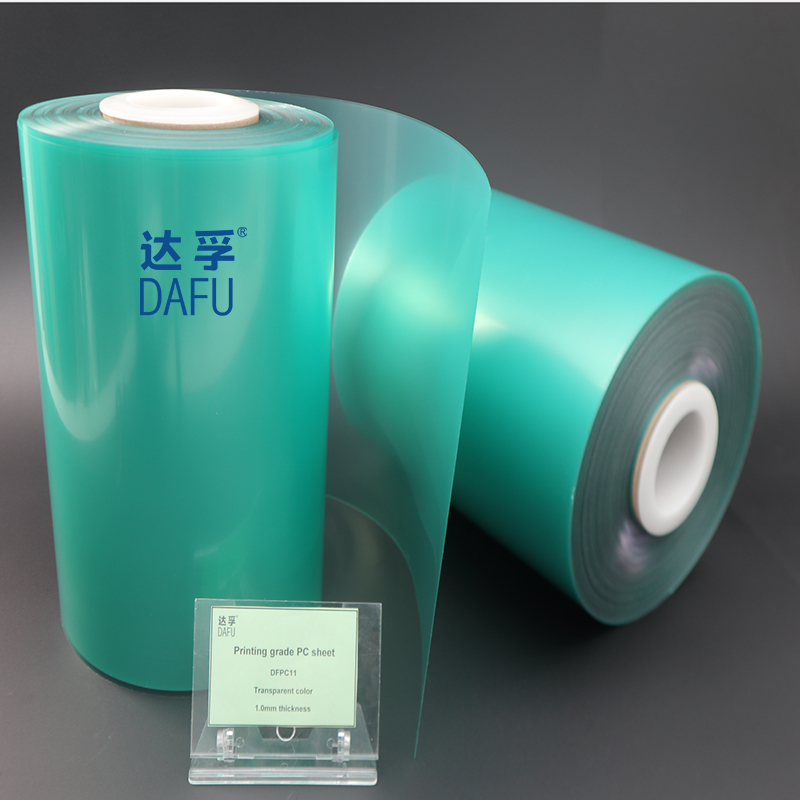
PC PMMA Film can serve as a transparent substrate for a decorated display window, but a dead-front effect comes from the complete optical design. The panel must conceal inactive symbols while allowing the required information to appear when illuminated. A substrate chosen only for high transmission cannot resolve that balance by itself.
Dafu's engineering film range offers co-extruded PC/PMMA composite film and sheet with transparent, printable and decorative processing features. Its product information describes the combined material construction and lists typical optical properties. It does not present the clear film as a ready-made hidden-display filter. Ink, masking, surface appearance, illumination and the cavity behind the window require separate development.
Define the off-state appearance first
Specify what the user should see when the LEDs are off. The target may be a uniform dark surface, a color that matches the surrounding bezel, or a continuous decorative pattern. Each target creates a different comparison. A sample that conceals an icon against black backing may reveal it when placed over a pale internal component.
Build an unlit mock-up with the actual internal geometry, including gaps and reflective parts behind the window. Examine it under the intended ambient lighting and at practical viewing angles. This helps identify whether the hidden graphics are visible through transmission, surface reflections or a mismatch between the window and its border.
The approval should include the display's immediate surroundings. A small color difference can be more obvious beside a molded housing than on an isolated coupon. Keep physical reference parts with the film samples so the apparent match is not judged from memory or a screen photograph.
Treat light blocking as an optical budget
A darker filter can improve concealment, but it also reduces the light available from the display. Compare off-state appearance and illuminated readability on the same samples. Approving those functions in separate meetings with different constructions can lead to a design that satisfies neither when assembled.
Create a small set of controlled ink or filter variants. Hold the substrate, LED source and geometry constant while changing the intended variable. Record the result rather than relying on descriptions such as slightly darker. The purpose is to locate a usable balance, not simply to maximize opacity or brightness.
If the design requires more drive to compensate for light loss, the electronics team must assess the implications. Do not promise that a different film will reduce power or heat without measured evidence. The material comparison should show the optical change and leave the resulting electrical decision with the complete product design.
Use the two material surfaces deliberately
Identify the PC and PMMA sides of the chosen composite and confirm where printing, protective treatment and bonding are intended. A decoration trial should use the same orientation as production. Otherwise, the approved appearance may be based on an optical path that the final part will not reproduce.
For a reverse-decorated window, the viewer sees the graphics through the substrate and any intervening layer. Evaluate that arrangement directly rather than measuring a loose printed film from its ink side. If a front surface texture or hard coating is selected, include it in the optical sample as well.
The supplier lists different product categories and finishes, so the purchasing specification should identify the selected construction. The typical transparency values do not establish the performance of a dark printed window, nor should a general abrasion description substitute for testing the final exposed surface.
Control unwanted light paths
An illuminated icon can leak into an adjacent inactive symbol or produce a bright outline around a mask. These defects may arise from the cavity and mask geometry even when the incoming film is consistent. Examine the assembled arrangement before asking for a more opaque substrate.
Use representative dividers, LED locations and mask registration in the trial. Turn individual symbols on while leaving neighboring ones off. This reveals cross-illumination that may remain hidden when all the icons are lit together. Also inspect edge regions, where gaps in the decorative border can expose a bright source.
Small apertures deserve a separate look. A registration shift that is unobtrusive on a large icon can change a narrow stroke substantially. Keep registration tolerances connected to the graphic drawing and inspect the actual printed feature, rather than approving only broad transmission measurements.
Evaluate readability in realistic ambient conditions
An attractive demonstration in a dark room can conceal poor daylight contrast. Include the ambient conditions relevant to the installation and the viewing distance at which the user must recognize information. Agree how off-state concealment and on-state legibility will each be judged.
Check the chosen LED color, not merely a convenient white test source. The decorated layer's spectral behavior can change the transmitted appearance. Two light sources that look similar before passing through the window may give different results afterward. Use the intended source or a justified equivalent during approval.
For curved or formed panels, repeat the comparison on the final geometry. Decoration can stretch, thickness can vary and reflections can change across the surface. A flat sample is useful for selecting the initial optical direction, but it cannot establish every feature of a formed window.
Keep an accepted dark-room demonstration and the ambient-light evaluation connected to the same sample identity. If the artwork or LED supplier changes, that reference helps the team determine which part of the optical balance needs to be assessed again.
The resulting specification should connect the clear composite substrate with the approved decoration, surface finish, LED arrangement and viewing conditions. Request enough PC/PMMA material to build complete optical mock-ups, then retain the accepted stack as a reference. This gives the purchasing team a concrete material requirement and gives the display team evidence for the hidden-icon effect. The useful result is a window that looks deliberate when inactive and presents information clearly when the user needs it.