
A dielectric-loss entry is only useful when it relates to the frequency and conditions of the intended application. Buyers considering PEEK Film for electronic insulation should check those conditions before comparing materials. A number measured at one frequency does not establish loss across an entire operating band, and it cannot alone predict the behavior of a completed circuit or insulation assembly.
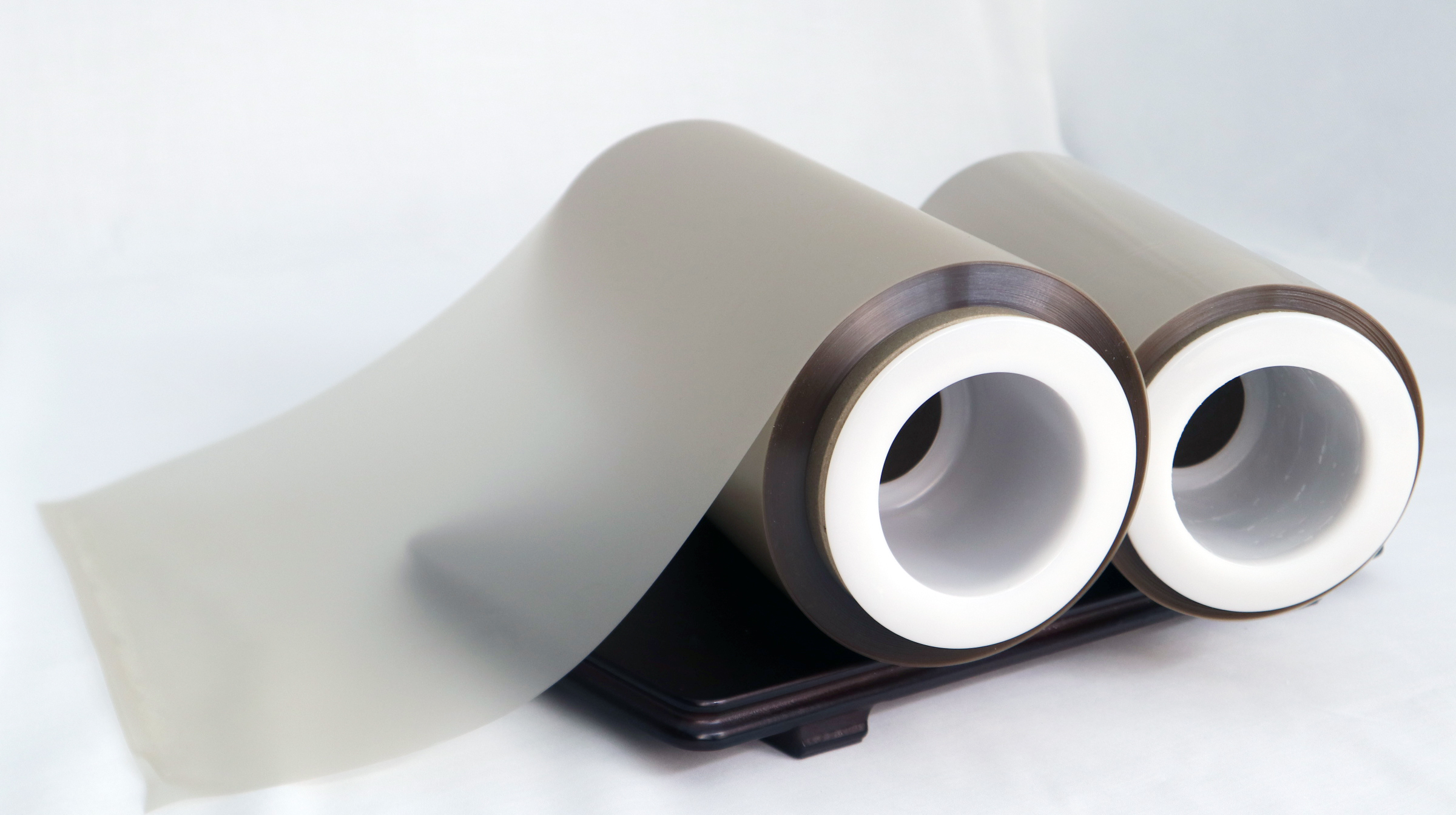
Dafu's PEEK product page in Dafu's engineering film range identifies a high-crystalline film and includes electrical reference measurements at 1 MHz. The page describes the tested sample as 25 µm and labels the laboratory data as non-guaranteed reference values. Those details define the context of the information. They should remain attached to the comparison instead of being turned into an unrestricted high-frequency performance claim.
Start with the electrical function
An insulating spacer, a film carrying conductive patterns and a layer within an interconnect do not necessarily need the same evidence. Identify what electric field the material experiences and what outcome matters to the design. The requirement may concern insulation, signal behavior, heating or a combination. A general request for good dielectric performance does not tell a supplier which measurement is most relevant.
State the operating frequency or band and whether the application involves a waveform with other relevant frequency content. Give the responsible engineer enough detail to define the material assessment. Do not reduce a complex application to a single convenient test frequency simply because that is the only row available in a public data table.
Keep dielectric constant and loss distinct
Relative permittivity describes one aspect of the dielectric response. Dissipation factor or loss tangent describes another. When comparing data sheets, confirm which quantity is reported and use matching definitions. A material should not be credited with low loss merely because its dielectric constant is lower than another material's, nor should a loss value be treated as a direct measure of breakdown strength.
Units and reporting format also deserve attention. Loss tangent is commonly presented as a dimensionless value, while other electrical properties use different units and methods. Preserve the original test identification. If a comparison sheet drops frequency, specimen thickness or conditioning to make columns look simpler, it can remove the very information needed to judge whether the entries are comparable.
Treat the reference frequency as a boundary
The 1 MHz entry on Dafu's page is a reference point for the identified laboratory specimen. It does not establish a measurement at a higher frequency, and the public information does not provide a complete frequency sweep. For a design operating elsewhere, request applicable data or arrange evaluation under the required conditions. Do not interpolate a promised result from an unspecified trend.
The same caution applies to temperature and environmental conditioning. Request these details when they are needed to interpret a result. This is why quoting a bare loss number without its measurement context is less useful than describing the evidence that is actually available. A supplier can then distinguish an existing report from a new test that the project still needs.
Compare like specimen forms
PEEK can be supplied in different physical forms, and the product page specifically identifies a high-crystalline film. A result from a bulk plaque, another film morphology or a different process history should not silently become a specification for the ordered web. Ask which material and specimen preparation the report covers. Keep sample identity consistent from the quotation through the electrical trial.
For thin-film measurements, the laboratory also needs to select a method and fixture appropriate to the specimen and frequency. Describe the actual gauge and available sample area. If a report uses a different thickness, ask how its result should be interpreted for the proposed film. Do not assume that every fixture or specimen arrangement produces interchangeable values merely because the base polymer is PEEK.
The circuit adds its own losses
A finished assembly contains more than an isolated dielectric film. Conductive material, surface condition, adhesives, geometry and interconnections may influence measured circuit behavior. A favorable film result cannot be subtracted from an unexplained assembly measurement to prove that every other contribution is acceptable. Establish what the material test measures and what must be checked after assembly.
This distinction is useful when comparing an existing insulating layer with PEEK. Keep the circuit geometry and other materials controlled where possible. If multiple features change at once, the final result may improve without identifying which change caused it. A disciplined comparison gives the design team stronger evidence about the value of changing the film itself.
Link thermal suitability to the actual duty
PEEK may be shortlisted because the application also involves heat or a demanding environment. That material-selection reason does not remove the need for frequency-specific electrical evidence. Assess the relevant thermal duty independently, then determine whether dielectric measurements at the required conditions are available. An elevated-temperature application should not automatically inherit a room-condition comparison whose conditions have not been confirmed.
Likewise, dielectric-loss information alone does not establish a permissible service temperature or predict the temperature rise of the finished part. The electrical field, geometry, heat removal and other materials are part of that assessment. Keep any temperature-rise conclusion tied to the tested assembly or an appropriate engineering analysis, rather than attributing a universal result to the film category.
Build an enquiry the supplier can answer
Provide Dafu with the intended film gauge, construction, frequency range and electrical function. Request the available method, specimen details, temperature and conditioning alongside any reported loss measurement. If the required operating band is not covered, identify that gap early enough to obtain representative samples for further evaluation. This avoids designing around a reference figure that answers a different question.
The objective is a material decision supported by evidence at the relevant frequency and in the relevant construction. Dafu's reference data provide a defined starting point for discussing high-crystalline PEEK film. Final selection should connect that starting point to the actual electronic duty, with the limits of both material and assembly measurements clearly recorded.