
Abstract
The electric vehicle revolution is entering a new phase, and PEEK film (polyetheretherketone film) is at the center of it all. As NEV penetration rates surpass 60% and the industry shifts toward 800V and higher architectures, traditional insulation materials are reaching their limits. PEEK film offers a compelling alternative—delivering superior dielectric strength, thermal stability up to 260°C, and mechanical performance at a fraction of metal's weight. Recent breakthroughs include Hyundai Mobis' development of a PEEK film that boosts EV motor output by approximately 5%, Syensqo's Ajedium™ PEEK slot liners that enhance e-motor efficiency by up to 2%, and successful integration into 800V+ systems by leading powertrain manufacturers. This article examines the material innovations, industry milestones, and market trends driving PEEK film adoption in the global automotive sector.
Introduction: The Electric Vehicle Tipping Point
The first quarter of this year marked a historic milestone—new energy vehicle penetration rates surpassed 60% for the first time, even as overall automotive sales declined by 5%. This tipping point signals an irreversible shift toward electrification. But with this transition comes an urgent challenge: how to make electric vehicles lighter, more efficient, and capable of handling increasingly demanding electrical architectures.
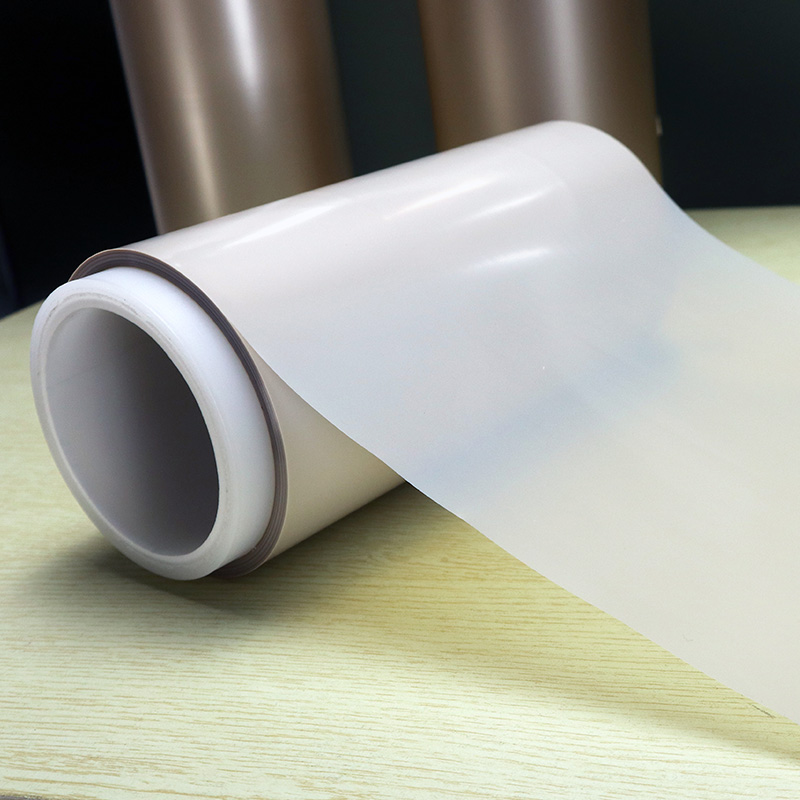
Enter PEEK film (polyetheretherketone film). This high-performance engineering plastic is rapidly becoming the material of choice for automotive engineers tackling the toughest challenges in EV design—from high-voltage motor insulation to battery thermal management and lightweight structural components.
Breaking News: Hyundai Mobis Develops PEEK Film That Boosts EV Motor Output by 5%
In a landmark development announced in December 2025, Hyundai Mobis successfully created a polyetheretherketone (PEEK) film that increases electric vehicle drive motor output by approximately 5%. This high-performance plastic is lightweight yet heat-resistant, and when wrapped around the copper wires (coils) tightly wound inside electric motors, it blocks abnormal current flow and prevents overheating.
The significance of this breakthrough cannot be overstated. Previously, manufacturers relied on a synthetic fiber called aramid for this application. However, by applying PEEK film, Hyundai Mobis achieved improved coil fill factor and thermal efficiency—directly translating to increased motor output. The surface of this PEEK film is more uniform than existing materials, reducing friction during the coil insertion process and improving overall process efficiency. The company has also ensured durability so that the PEEK film can withstand temperatures above 180°C.
This achievement represents a significant leap forward in EV motor efficiency and demonstrates why PEEK film is rapidly replacing traditional insulation materials in next-generation electric powertrains.
The 800V Revolution: Why PEEK Film is Essential
As electric vehicle architectures evolve from 400V to 800V and beyond, insulation materials face unprecedented demands. Higher voltages require superior dielectric strength, thermal management, and long-term reliability under extreme conditions.
PEEK film has emerged as the solution. Syensqo's Ajedium™ PEEK film technology has been successfully tested with 800-volt systems, demonstrating superior copper fill and heat dissipation capabilities compared to traditional aramid paper alternatives. This enables manufacturers to downsize e-motor and battery designs while eliminating the need for conventional moisture management systems.
The technical advantages are compelling. PEEK slot liners provide enhanced dimensional stability and reduced thermal expansion coefficients compared to traditional polyimide films, enabling tighter manufacturing tolerances and improved electromagnetic performance. The reduced insulation thickness achieved through PEEK film implementation directly impacts motor power density metrics—by increasing the copper fill factor within existing slot constraints, engineers can achieve higher current density